Reducing Underwater Noise
Many marine animals rely on sound for essential life functions such as communication, navigation, and foraging. Commercial shipping is a significant contributor to anthropogenic ocean noise pollution. Vessel speed reduction (VSR) in regions with high whale presence is a crucial operational strategy that mitigates the harmful effects of chronic noise pollution, as ships traveling at reduced speeds emit less noise.
Photo: Gabriel Dizzi

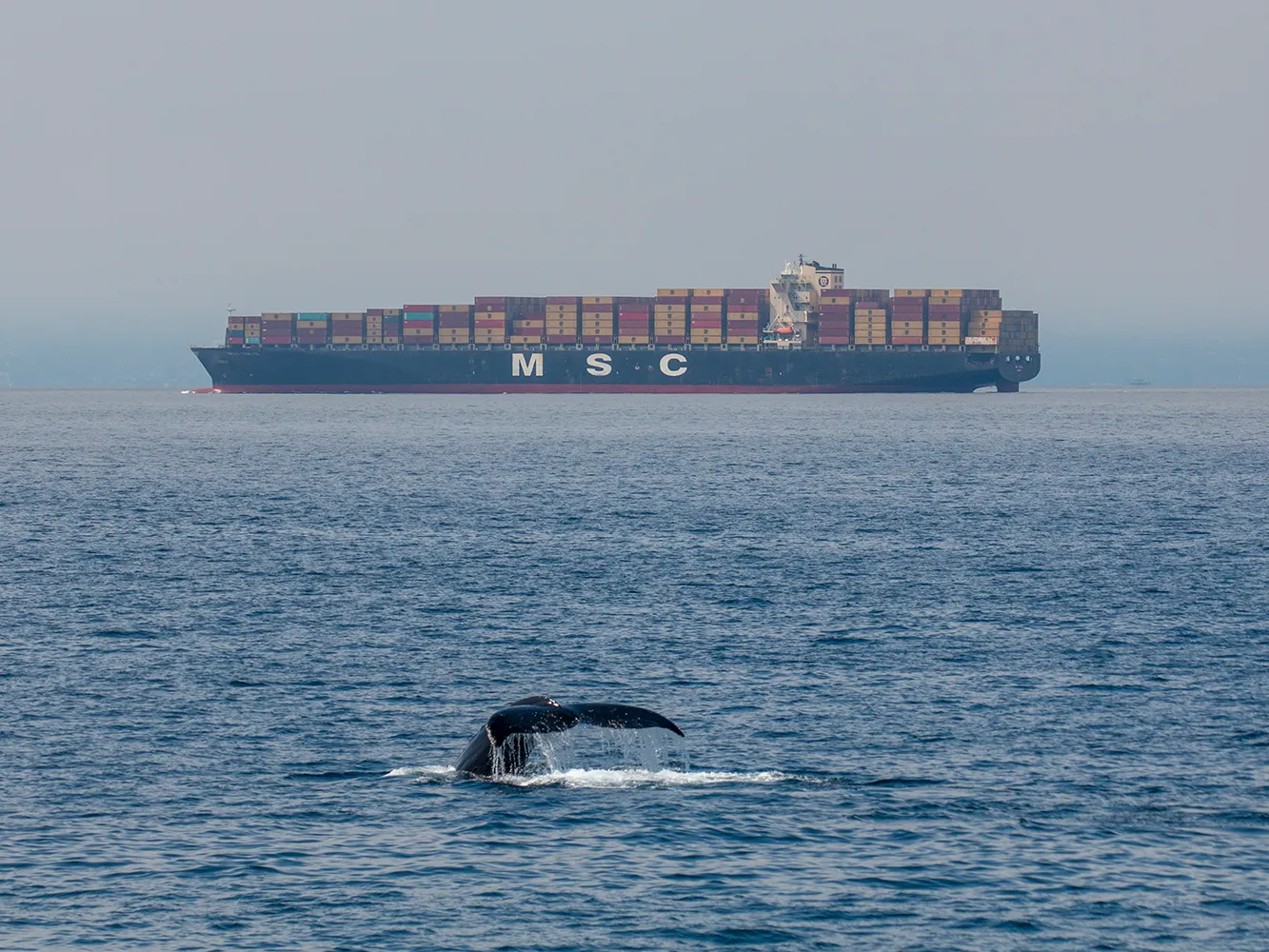
Photo: Dustin Harris
Underwater Noise and Marine Animals
Whales have evolved over the millennia to use sound for their daily life functions. Noise pollution disrupts these essential behaviors, threatening their ability to thrive.
The low-frequency noise produced by large vessels masks the communication signals of whales, dolphins, and other marine species, disrupting social interactions, mating calls, and mother-calf bonding.
Reducing noise pollution generated by ships has become a conservation priority for the United Nations’ International Maritime Organization.
The 5.2 dB reduction by participating vessels in the 2025 Season corresponds to ~45% lower sound pressure. Sound pressure determines how organisms detect sound and perceive loudness. Because whales have exceptional hearing and specialized anatomy that perceives sound vibrations through their skulls, sound pressure is a critical measure for biological exposure.
Reducing Underwater Noise one Ship at a Time
Participating shipping companies in the Protecting Blue Whales and Blue Skies program voluntarily reduce their speeds to 10 knots in VSR zones, reducing underwater noise as well as the risk of ship strikes to endangered whales, greenhouse gas emissions, and air pollution.
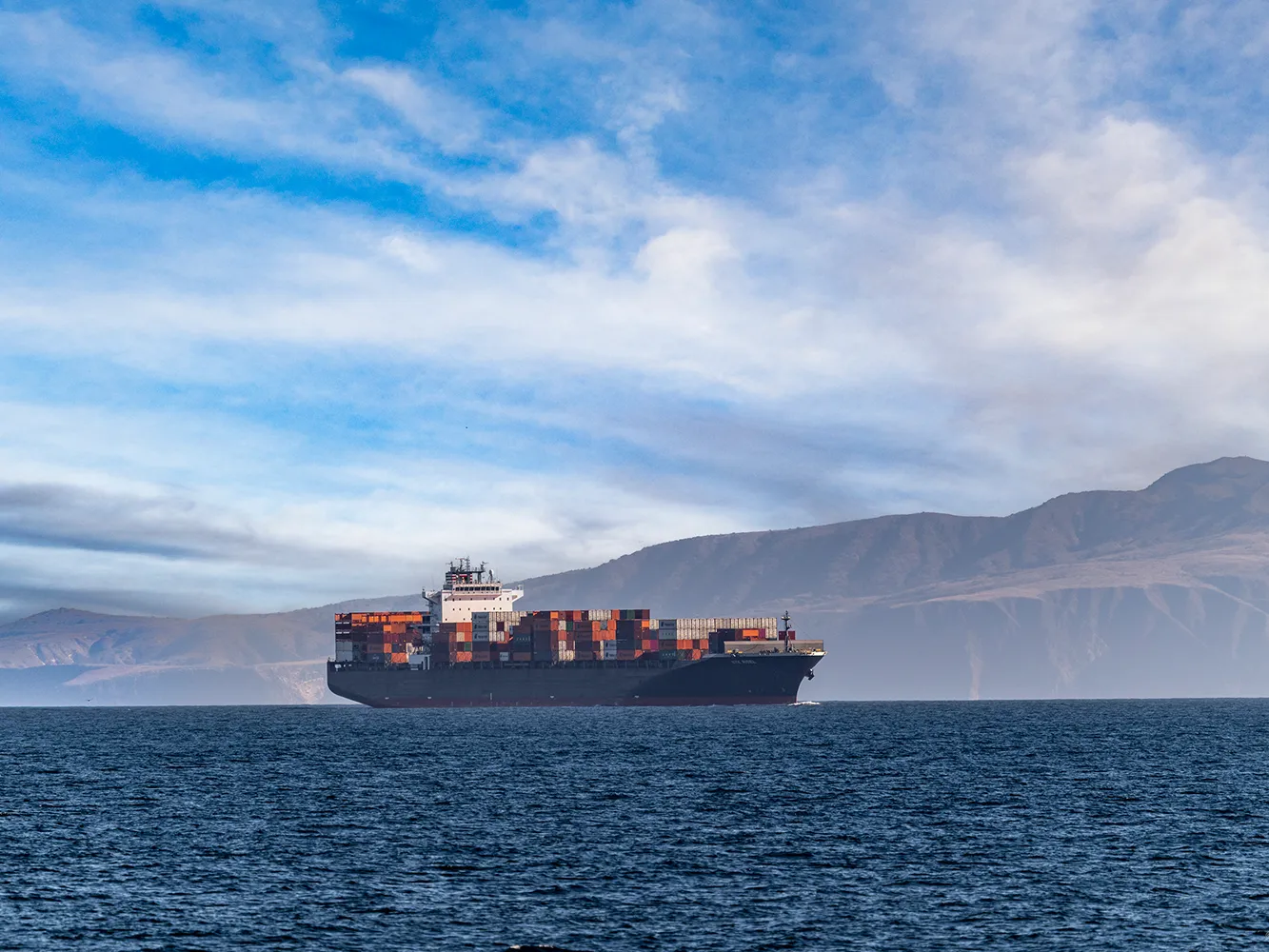
Photo: Ralph Clevenger Wildlife
How We Measure Progress
Noise reductions associated with the program are determined by comparing underwater radiated noise of participating vessels during the VSR season versus time periods outside the VSR season. The program partners with the Scripps Machine Listening Lab and Dr. Vanessa ZoBell, at the Scripps Institute of Oceanography for underwater noise analysis.
Verification Partners
The program works with third-party researchers and consultants to calculate the environmental benefits of participation.

Take Action
Help Blue Whales and Blue Skies spread awareness of responsible shipping practices, increase shipping company cooperation rates, encourage engagement with brands, and support further research and solutions for cleaner air, safer whales, and a quieter ocean.
Enroll your Fleet
Any company who operates container, car carrier, bulk cargo, or tanker vessels that pass through the Vessel Speed Reduction (VSR) Zones is eligible.
Photo: Ralph Clevenger Wildlife
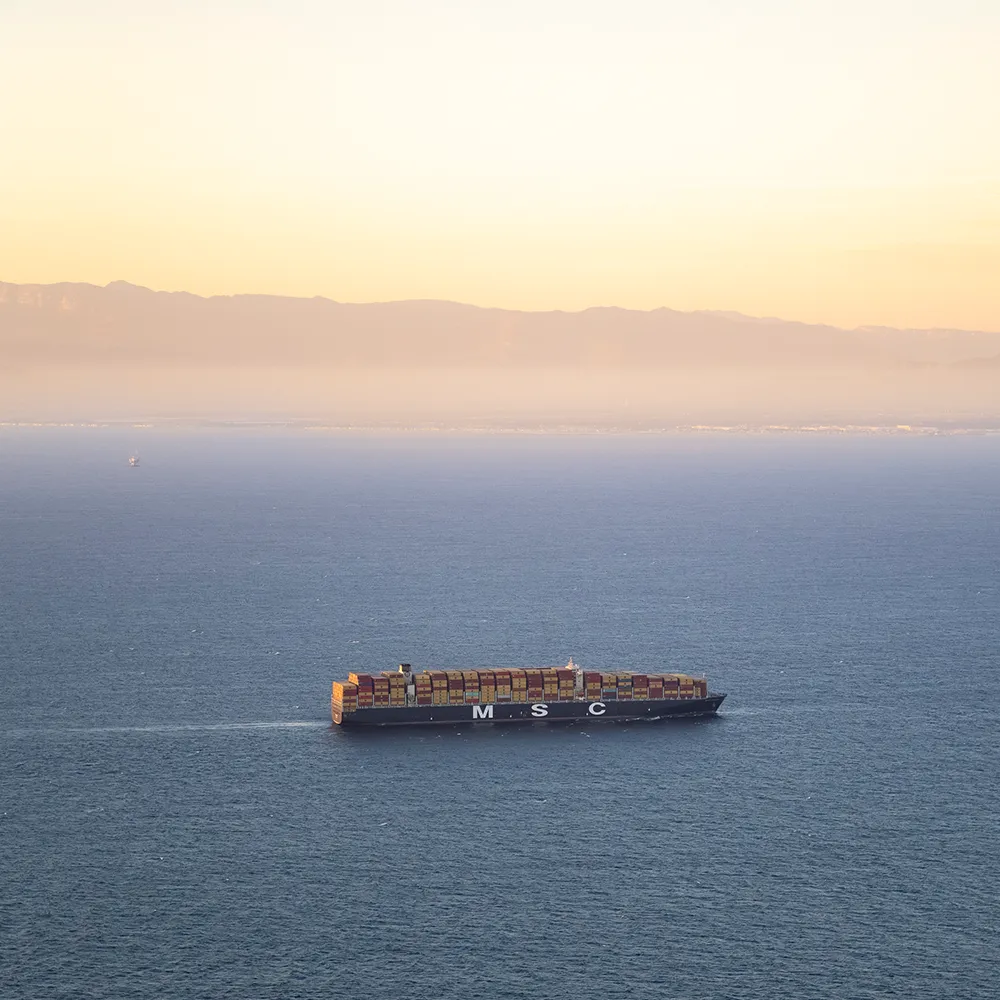
Become An Ambassador
Any company that ships goods with, or works with one or more participating shipping line is eligible to join.
Get Involved
Supply chain practices matter for biodiversity and air quality. Support responsible shipping practices for cleaner coastal air, safer whales, and a quieter ocean.
Photo: Robert Schwemmer